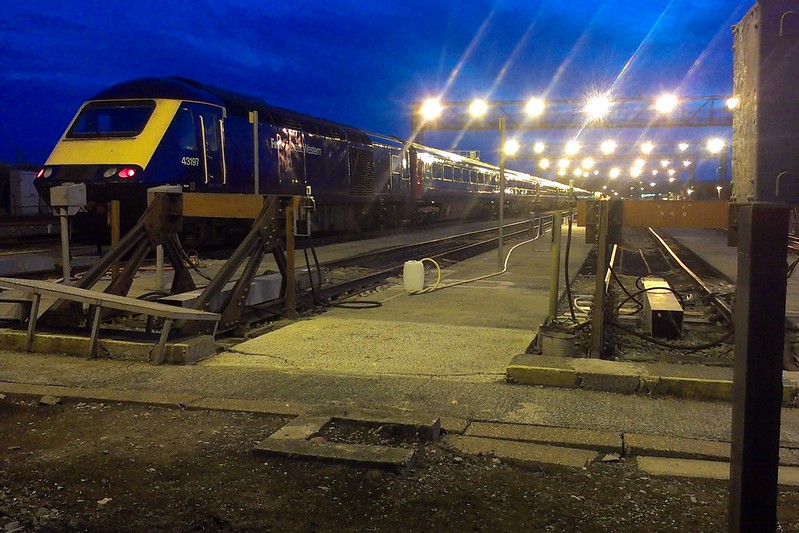
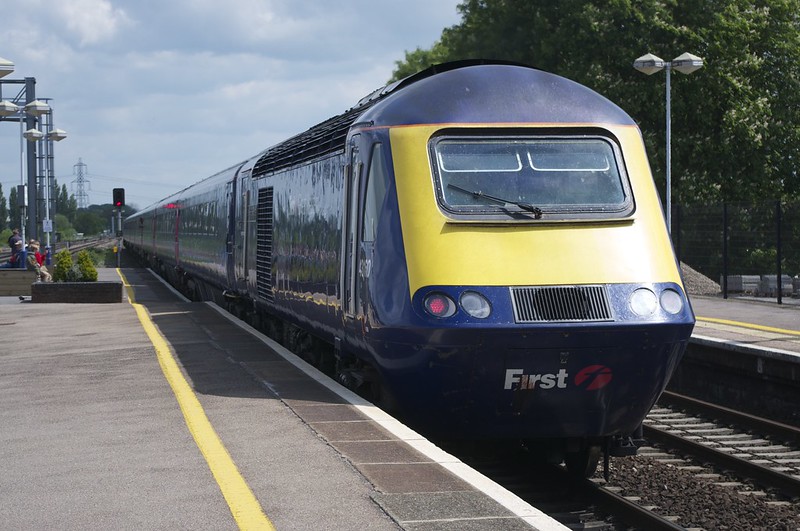
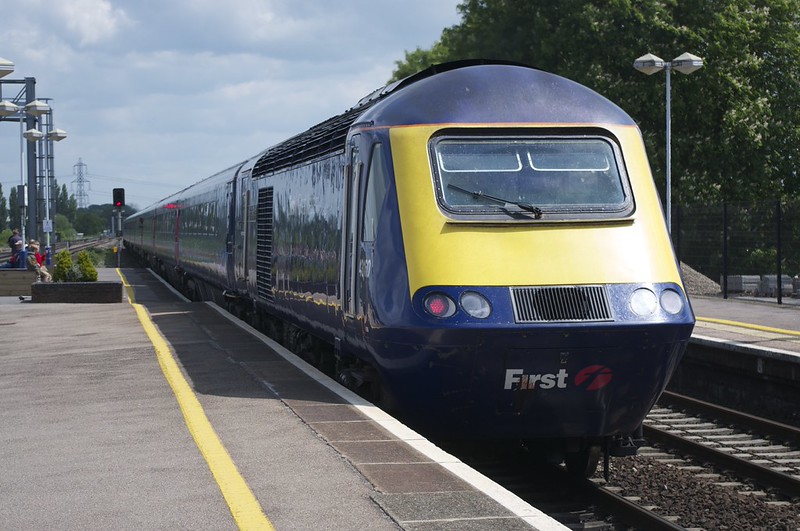
I have never been much of a train spotter but I have always loved the old HSTs so was saddened to see this tweet from @GWRHelp
We are saddened to hear that Sir Kenneth Grange has passed away. A design legend, Sir Kenneth created the look of the iconic High Speed Train. We were honoured to name HST locomotive 43002 after him in 2016. He also joined us in 2019 as the last HST train left Paddington. RIP and thank you Sir Kenneth.
I dont take many train photos – but I have managed a few of these iconic trains. As GWR say – RIP Sir Kenneth – and thank you.
Had to share this one in case anyone is interested.
Design your own special train livery for GWR & The NHS
We all know what a fantastic job our NHS and other key workers are doing to keep us safe. Now here is a chance to show that appreciation in a BIG way. We’re looking for your ideas to design a special livery showing your support and thanks to this wonderful group of people. We will then take the best designs, either complete or part of them, and put them on one of our Intercity Express Trains. Just download the train outline here and either draw or use your computer to create your special design. Then post them on to our Facebook page or share them on Twitter using #GWREnterTrainment for us to see. The competition closes at 23:59 on Friday 1 May and we will contact the winners directly.
More new trains, this time they will be working down here…
Passengers to benefit from new trains, providing more seats, more services and reduced journey times
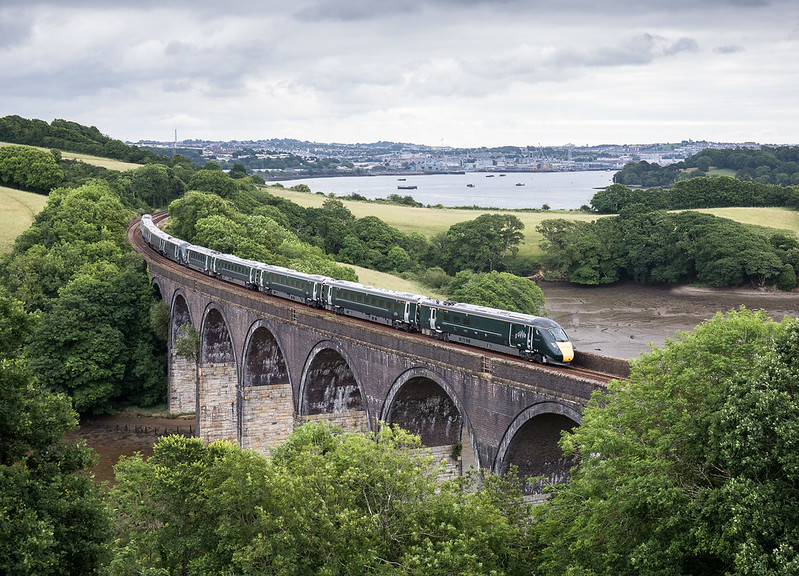
Great Western Railway’s first Intercity Express Train has made its maiden voyage to Cornwall this morning, as part of a very special test journey from London Paddington to Penzance.
Part of an expo event with Cornwall Council to showcase improved rail services for the South West, the Intercity Express Train (IET) (800 003 and 800 004) left London Paddington at 0533 and arrived at Penzance Station at 1101.
Transport minister Paul Maynard said:
“We are upgrading our railways to deliver the biggest modernisation programme for over a century and the improvements that passengers have asked for.
“These new trains will offer greater capacity, reduced journey times and more reliable services from London to Penzance.”
Councillor Geoff Brown, Cornwall Council Cabinet Member for Transport, welcomed the investment from GWR and said:
“The new fleet forms part of a £400m package of rail investment that we are working with GWR and Network Rail to deliver, which will transform rail services on our mainline network and, in doing so, provide a key element of the Council’s proposals for a One Public Transport System in Cornwall.”
From 2017 this new fleet of Intercity Express Trains will connect London Paddington to Bristol and South Wales and from 2018 they will connect London Paddington to Exeter, Plymouth, Penzance and many more communities.
GWR Commercial Development Director Matthew Goltonsaid:
"We know how important the railway is to the economies and communities of the South West, and today's event marks another milestone in delivering the improvements we know our passengers wish to see.
“These trains will help us deliver faster, more frequent services into the South West, providing up to a fifth more seats per train.”
The new rolling stock replaces 40-year-old trains currently serving this key intercity route This will mean additional seats into and out of the West of England, and will help speed up typical journey times from London by 5 minutes (to Exeter), 6 minutes (Plymouth) and 14 minutes (Penzance).
Sandra Rothwell, Chief Executive of the Cornwall and Isles of Scilly Local Enterprise Partnership, said:
“Good connectivity is vital to business and the growth of our economy which is why we have made rail investment one of our top priorities. These fantastic new GWR trains, coupled with ongoing investment from the LEP and its partners in signalling, station upgrades and WiFi, will transform main line rail services in Cornwall with increased frequency, more comfort and faster journey times.”
The 93 train fleet is fitted with bi-mode technology, allowing trains to use both diesel and electric power, and passengers to enjoy the benefits of new trains as soon as possible. Prior to entering service next Summer, the train will now be made ready to begin testing on the network.
The new fleet harnesses Hitachi’s pioneering Japanese bullet train technology, known for its quality and reliability. Passengers can expect more seats, better on-board facilities and shorter journey times.
Mark Langman, Route Managing Director of Network Rail, said:
“Improving the signalling, upgrading stations and preparing the railway for the Intercity Express Trains marks a real milestone in the modernisation of the railway in the South West, as we continue to deliver our Railway Upgrade Plan.
“Passengers, communities and the local economy will feel real benefits with extra services, more seats, greater comfort and a more reliable railway in Devon and Cornwall.”
Ahead of the fleet of trains arriving in the South West, Network Rail has invested £47million to prepare the railway for the new Intercity Express Trains.
The modernisation includes a £25million signalling upgrade as part of the Cornwall Capacity Enabling Scheme, which has been part funded by Cornwall Council to the tune of £15m. This scheme includes 21 additional signals added to the line and seven level crossing upgrades.
The extra signalling will allow for more trains to be on the track, and will be controlled locally from the existing signal boxes at Plymouth, Lostwithiel and Roskear.
A further £12m has been invested for de-vegetation in Devon and Cornwall and another £10m for gauge clearance as well as Totnes and Devonport platform extensions.
Passengers will also benefit from new on-board technology, including real-time journey updates and seat reservation screens.
The Intercity Express Train is designed to withstand the region’s variable weather conditions, including routes along the Dawlish coast.
As well as the first visit from an IET, those in attendance will also be able to look at a new and improved Night Riviera sleeper berth. The Night Riviera service is being modernised and will include a new seated carriage, a cocktail bar and refreshed berths with hotel style keyless door entry, USB charging ports and a host of other improvements. See a video of the new sleeper here.
From this autumn, the first wave of Intercity Express Trains will run on the historic Great Western main line, connecting London to key UK cities including Reading, Bath, Bristol and Cardiff. Production of these trains is already underway at Newton Aycliffe, County Durham.
From next Summer a second wave of new trains will begin running as far south as Penzance along coastal routes in Devon and Cornwall. The first of these trains arrived in the UK on Saturday 17 June. This £500 million fleet is financed by Eversholt Rail and will be leased to Great Western Railway.
The entire fleet of 93 trains (58 five-car, 35 nine-car) will be in passenger service by the end of 2019.
Continuing our catch up of recent(ish) railway news from the area:
Planning consent for a new rail depot at Exeter has been submitted by Network Rail on behalf of GWR today. (24th Feb 2017) This submission forms part of a wider programme of rail improvements to increase rail capacity in the South West, including new and refreshed trains and station improvements. The train operator GWR is looking to improve the existing Exeter Olds View Depot train maintenance facility in Exeter to accommodate an increase in fleet size in the Devon and Cornwall area which will lead to more seats, and more frequent services. GWR Regional Development Manager West, Dan Okey explains: “With brand new electric trains coming to suburban London services and bi-mode Intercity Express Trains on the mainline in Devon and Cornwall, this will allow us to move part of our existing regional fleet to Exeter - providing more carriages, and more frequent services to the area.” The new depot is situated alongside existing facilities next to Exeter St. Davids staation and will provide enhanced modern servicing, cleaning and maintenance facilities necessary to support these trains. The plans include office and welfare facilities for staff and the depot is designed to provide improved facilities for train maintenance. GWR is seeking to begin the new depot, subject to planning consent being secured, in Spring 2018 and will complete in mid 2019. New electric trains in London and Thames Valley area, and new Intercity Express Trains across the GWR mainline network will enable GWR to provide significant improvements in capacity on mainline, regional and local suburban services. These changes are part of the wider franchise improvements that GWR is delivering and is one of the largest fleet upgrades that the Great Western network will see in a generation.
“The Ride Cornwall ticket is a one-day rover ticket that gives the holder a day's unlimited travel on all rail and most bus services within Cornwall and between Cornwall and Plymouth, after 9am Monday-Friday and at any time on Saturdays, Sundays and Bank Holidays” Excellent
OK so it goes to the First Kernow homepage but there is a tickets link on the top of the page. however after a lot of clicking around I can only get details of the daily First ticket at £12 only valid on First Kernow services. So thats a blank
OK so back to Cornwall County to give them another go this time on the old and rather ugly Public Transport in Cornwall page
The first thing which made me laugh was that this website was designed… badly I think, but then if it works I will let them off.
so lets to go Bus Tickets on the left hand column
The promising line here is For full details pick up a Ride Cornwall Leaflet or click here so lets see what we get
So its the full GWR web site. I cant see any clear link to the Ride Cornwall ticket though. I tried all the link and after a while found a page for Rangers and Rovers ( I am still not sure how I got there though) I completed the box (after waiting a while for the page to load)
We finally get something useful
There are some great value tickets hidden here which I for one knew nothing about but for now we will stick to Ride Cornwall so lets try the More Info link
we finally get some details with a nice long page - the highlights being
So if I cant get it on a Citybus then it looks like a trip to the Railway Station first - If I do this again then I will set out a little earlier next time.
A rather large increase in price from £10 to £13 another thing which Cornwall County Council have kept quiet!
Why is it so difficult to find information? Is it really that hard for councils to promote their own tickets? Is it really that hard for bus operators to promote such tickets?
A Great Western Railway Class 43 High Speed Train power car entered traffic on June 11 carrying a special wrap to mark HM The Queen’s 90th birthday.
The work was carried out at GWR’s Laira depot in Plymouth. It carries images of the flying flags of the Royal Standard and the Union.
Colin Page, Depot Manager of Laira said: “We are really pleased and honoured that one of our locomotives will be part of the Queen’s birthday celebrations. The guys at the depot have done a fantastic job of preparing the locomotive and the results speak for themselves. It looks fantastic.”
A signaller misjudged the space available on the platform for two trains that collided in Plymouth, an initial investigation has found. A train travelling from Penzance to Exeter collided with another train on platform six just after 15.30 BST on 3 April. The Rail Accident Investigation Branch initial findings found the signaller believed there was enough space for both trains on the platform. About 35 people were injured.
The report said: "Allowing trains to share a platform is known as permissive working, and is allowed for passenger trains using platform six. "The signaller could see the rear of the train from the signal box window and estimated there was enough room for the moving train to fit on the platform. This was not the case."
One of the trains was moved to platform six due to passenger lifts being closed for maintenance on alternative platforms, the report said.
While approaching Plymouth, the moving train accelerated to about 21 mph and went through a relatively tight, left-hand curve. That is when the driver saw the rear of the stationary train on platform six and was surprised to see it so close to the west end of the platform. The investigation report said: "He looked at the tracks to confirm which route the train was taking and, realising a collision was imminent, applied the emergency brake. "This was around three seconds before the collision, which occurred at about 15 mph. "Many passengers were standing in preparation to leave the train and were thrown into the train's fixtures and onto the floor.
Train 2E68 from Penzance to Exeter, composed of two multiple-car diesel class 150 units with around 60 passengers on board, would normally have used platform 8, but the signaller decided to signal it into platform 6 to allow passengers changing trains to 1A91 to do so easily, again because of the lift closure. The signaller incorrectly estimated that there was enough room at the platform for both trains.
Many passengers were standing because they were about to leave the train, and some were thrown around or on to the floor. Seven of those injured were reported to have needed hospital treatment, including the driver. Both trains were also damaged, and the station was closed for around 90 minutes.
The RAIB will follow these preliminary findings with a detailed inquiry into the actions of staff involved, the signalling and platform working arrangements at Plymouth, the performance of the train during the collision and any 'underlying management factors'.
It looks like the Plymouth accident will mean that figures for injuries on the UK’s rail network are already higher than 2015, when 29 people were injured in total, prompting the RSSB to praise the UK for having “one of the safest rail networks in Europe.
I have been keeping an eye out for more railway news from the area but sadly would rather not get news stories like this one:
AN INVESTIGATION has been launched after a train crash at Plymouth station left 18 people injured. As a train from Penzance to Exeter pulled into platform six on Sunday afternoon, it went into the back of another stationary train at "low speed". A spokesman said: "We can confirm we are investigating a low-speed collision between two trains at Plymouth Station at around 3.30pm this afternoon.
"Nine passengers who suffered cuts and bruises are being looked after by GWR staff and local ambulance crews. "Train services were suspended into and out of the station, however, they resumed just before 5pm."
BOSSES at train operator Great Western Railway say Sunday's crash at Plymouth train station was 'extremely unusual'. A total of 18 people were injured when a local service between Penzance and Exeter collided with a stationary train at platform six at about 3.35pm. And David Crome, general manager in the West for GWR, said this particular crash was unlike any other he had dealt with.
A spokesman for British Transport Police, whose officers joined fire and ambulance crews on the scene, said: "A number of people, including the driver of one of the trains, have sustained injuries as a result of the collision and are being treated by paramedics at the scene.
"At this stage we believe that a moving train collided into the back of a stationary train on platform six at the station and we are currently looking into the circumstances to determine how this happened."
Clearly this accident should not have been able to happen so something has gone badly wrong. It could have been a lot worse so lets be greatful that its a fairly minor accicent with few injuries. There will be an investigation which hopefully will get published so until then I for one wont speculate as to what went wrong. Lets hope all involved make a speedy recovery, from what would have been a frightening experience.
Its been a while since I covered any railway news but we have had a major news announcement today:
South Western Franchise
The Department for Transport has today (4 February 2016) announced the 2 train companies that have been shortlisted for the South Western franchise competition, after submitting an expression of interest.
The shortlisted bidders are:
First South Western Trains Limited
Stagecoach South West Limited
Rail Minister Claire Perry said:
The South Western franchise has some of the busiest routes in the country, serving a diverse range of passengers and places. It is vital that we have the best partner to help us meet the challenge of delivering better journeys for all customers using these services.
We are investing in additional capacity, and have ambitious plans for smart ticketing, customer service and improved connectivity across the South Western network, to give passengers real benefits across the region and beyond.
The current franchise is operated by South West Trains, and covers urban, suburban, regional, and long-distance routes between London Waterloo, Reading, Bristol, Exeter, Weymouth, and Portsmouth. It also includes the Island Line on the Isle of Wight.
The operating team at Great Western Railway (GWR) has taken the Golden Whistle in a national awards ceremony.
The train operating company, formerly First Great Western, scooped the Golden Whistle for Major Possessions, Projects and Central Station Team award - the highest honour within the 'outstanding operating team' category - at the Institute of Railway Operators Golden Whistle Awards.
The company was also handed two silver awards for regional and intercity operational performance. Customer services training manager Ashley Bray was also highly commended in the 'outstanding individual' category.
GREAT Western Railway (GWR), has achieved its highest ever score for customer satisfaction, according to an independent transport user watchdog, Transport Focus. Increasing its year-on-year measure for overall satisfaction by 3 percent from 81 percent to 84 percent, GWR has posted its highest score since the National Rail Passenger Survey began in 1999.
Mark Hopwood, GWR managing director, said recent investment to improve capacity and punctuality are having the biggest impact on customers. He said: “These results clearly show our commitment to building a greater west and investing in what we know our customers want to see, and reflect the hard work of thousands of GWR colleagues.
Of the five key drivers of customer satisfaction, GWR improved scores in four main areas, with punctuality improving by five percent, train comfort and length of journey by three percent and ticket purchasing up by one percent.
I will be trying to include more Railway and other non-bus news from the area this coming year although it not an area I know that much about. As always I welcome any contributions - if you see or hear of anything which you feel may be of interest please let me know, Photos are especially welcome!
I have (quite rightly) been reminded that this blog is supposed to be covering other forms of transport in and around the region as well as just buses. With so much going on over the last few months its been easy to miss other stories that would normally have been covered here. Hopefully now things have quietened down a bit I can start to catch up on a few rail stories.
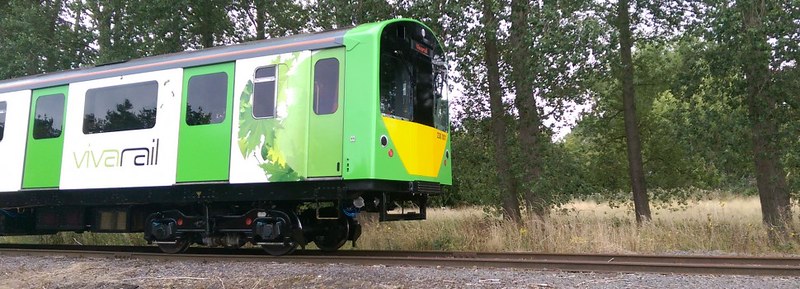
Vivarail Ltd. was formed in 2012 to produce a new type of rolling stock designed specifically for local rail services – the D-Train. Vivarail is headed by Adrian Shooter CBE, previously Chairman of Chiltern Railways, and the development team draws on almost 200 years’ experience in railway engineering and operations. The company is privately funded, in association with an international company that has a successful track record in railway developments worldwide. It is based at a rail-connected site in central England with full manufacturing facilities and a dedicated 4km test track.
The D-Train?
Traffic on Britain’s regional rail routes is growing quickly, but suitable rolling stock is in short supply. Existing diesel trains are fully utilised, and many older vehicles no longer meet passengers’ aspirations. Network-wide electrification can be the solution in the long term, but this will take time – and more capacity and better comfort are needed now.
The answer to this problem is Vivarail’s D-train – a new concept that can supplement or replace existing trains, upgrade services and equip new routes, at a fraction of the cost of buying conventional new rolling stock
The D-train uses the bodyshells, bogies and motors from surplus London Underground District Line trains. The bodyshells are made from corrosion-free aluminium, and will be re-engineered to give additional collision protection. The “flexible frame” bogies – which are specifically designed for lower-quality track – are barely 10 years’ old.
D-Trains are much more than London’s cast-offs. Instead they offer a new concept in sustainable travel for local rail services, with a first-class engineering pedigree.
Vivarail aims to begin mainline testing in October with the prototype three-car train, initially on the Moreton-in-Marsh - Honeybourne section of the Oxford - Worcester line, which passes the company's Long Marston base. A passenger trial with a franchised train operator will take place early next year.
“"GROCKLE TRAIN Testing in passenger service [of the 3-car Class 230 demonstrator train] will 'follow in the new year'. While Adrian Shooter would not be drawn on the location of the test service, informed sources expect it will be on First Great Western [sic] under the requirement in the Direct Award franchise agreement. Bristol-Severn Beach had been suggested as the evaluation route but FGW has settled on the Plymouth-Gunnislake branch with the unit based and maintained at Laira depot.. This is the logical choice since the Gunnislake branch will be more demanding operationally."
All very interesting!
It remains to be seen if it does indeed end up being tested down here. Its certainly a very interesting project so lets hope it gets through all its testing unscathed and the project starts to become a reality.
Today we have this wonderful report on a train accident at Saltash Station 27th March 1905. The report gives a matter of fact view on what happened when engine 835 collided at low speed with its carriages injuring quite a few passengers. Below are just a few details from the report which can be viewed on the link below the article. It all points to a very different world to what we have now. Its hard to imagine nearly 200 workmen waiting for the 6am train to Plymouth these days! Finally we end with a photo from Derek Taits collection showing Saltash Station as it was at the time this accident occurred.
SIR, I HAVE the honour to report, for the information of the Board of Trade, in accordance with the Order of the 5th April, the result of my inquiry into the circumstances which led to a collision on the 27th March 1905, between an engine and the carriages of a passenger train, at Saltash, on the Great Western Railway. In this case six four-wheeled coaches, forming the 6.15 am workmen's train from Saltash to Devonport, were standing at the down platform in Saltash Station, when the engine, when setting back for the purpose of coupling, struck them with considerable violence.
The engine was a four-wheels-coupled, with trailing axle, tank engine, and was moving bunker first. It was fitted with brake blocks on the coupled wheels, operated by steam and hand power. All the wheels of the coaches were fitted with blocks actuated by the vacuum brake, which was in operation at the time the collision occurred. The coaches were filled with passengers, waiting for the train to start. Twenty-seven on these complained of injuries, but fortunately none were of a serious character. The damage to rolling stock was trifling.
Saltash Station, the scene of this collision, is on the single line between Keyham and St Germans. There is the usual loop pair of lines for up and down traffic, and similar up and down platforms outside the running lines. The lines through the station are level. The immediate approach from the single line at the east end is on a falling gradient of 1 in 106. The distance from the eastern end of the standing coaches to the east end of the down platform was about 33 yards and from the same spot to the east end loop points about 60 yards.
I was acting stationmaster at Saltash from 6 a m . on March 27th. The workmen's train is due from Plympton at 6.6 a.m. I was engaged booking passengers when this train arrived at 6.22 am., and after the train ran in I went round to the down platform, and after the workmen had entered the train I assisted in closing the doors. There were between 180 and 200 passengers in this train leaving for Devonport. I was at the west end of the train walking towards Royal Albert Bridge at the east of the station, when I saw the engine coming back to the train. When the engine was approaching the train at a distance of about 14 yards, it was moving at a higher speed than usual, and I became afraid there would be something the matter, but I could do nothing as the engine was then close to the coaches. The collision was very sharp, but it did not seem to me that the train moved much, as all the brakes were acting.
Alfred Williams, fireman, states : I have been in the Company's employ about four and a half years, and a shunting fireman for eight months. I booked on duty at 2.50 a.m. on the 27th March for 3 a.m. engine turning. At 4.15 a.m. I started to prepare engine No. 835 to work the 5.15a.m. workmen's train. It would be about 4.55 a m . when I was engaged in filling the tanks. To make sure both sides were filled I had a lamp, and in addition put my hand in each side and felt the water, which was to the top of the tanks. My mate asked me if both sides were full and I replied "Yes." On the journey to Plympton we were detained 24 minutes at Tavistock Junction signals. When at Plympton I noticed the engine wasted a considerable quantity of water by priming; this, however, ceased when we left with the 5.40 a m. workmen's train. On arrival at Saltash our engine was detached and run back over the points, when I applied the hand brake and checked the engine without difficulty. We then ran ahead over the up line points; after these points had been turned we started back at a speed of about eight miles per hour towards the train. My mate only put on steam whilst the engine made a few revolutions, and as he shut off steam I applied the hand brake; The rail was slippery and consequently the brake took but very little effect. Seeing this my mate applied the steam brake ; the wheels then picked up, but the speed had been reduced to about four miles per hour, and at this rate we struck the train, causing damage to coaches and injuring several passengers. Whilst at Saltash, by the injectors failing to work, we discovered the tank was empty. The water must have been all used up on the journey as I am positive both tanks were full before we left Plymouth shed. I did not apply sand when the wheels picked up - it was my duty but I had not had time to think of it. I cannot explain why the hand brake should not have acted efficiently in stopping the engine at the east end of the station.
The 1st January is usually a fairly quiet day as most people recover from the night before. However, the start of a new year is as good a time to start any major new initiative so the date sees many key events over the years. Two of them which changed public transport in Plymouth (and everywhere else) are noted here, in my first post of 2009, and my return to regular posting after a well earned break over Christmas!
1st January 1948
British Railways was born. British Railways (BR), which later traded as British Rail, ran most of the British railway system from the nationalisation of the 'Big Four' British railway companies in 1948 until privatisation in stages from 1994 to 1997. For Plymouth it meant the end of the Great Western Railway and The Southern Railway as two separate private railway companies. Bringing the lines in Plymouth under one common (state) ownership enabled lots of changes to be made over the coming years which probably wouldn't have happened otherwise, or at least not quite so soon.
1st January 1969
Forty years ago today saw the birth of The National Bus Company. Locally that meant Western National, Southern National, and Devon General. were all under the same ownership. It wasn't long before Southern National merged under Western National and then later Devon General was taken over too, although the name was to continue.
There you have it. Two starts to two different years both to have major impacts on the way public transport was provided in and around Plymouth. Things have of course changed a lot since these dates and in some ways have come around full circle with both the buses and the trains being run by large private companies rather than the state. Even the name Great Western lives on under the First banner although the Western National name has disappeared under a much blander 'First' branding.
I have set myself the aim of covering more of the history of Plymothian Transit this year than I have managed so far which means actually sitting down and reading some of the books I have purchased over the last year! If you have any suggestions as to what you want to see covered, or any information you think might be interesting then you know where I am!









![Reblog this post [with Zemanta]](http://img.zemanta.com/reblog_e.png?x-id=2efd9d2a-e362-4584-be1c-05228247e20d)

